
InDuna Risk Management’s Environmental Monitoring Services are limited to the actual monitoring and quantification of the parameters that could have a negative impact on the immediate and surrounding environment as well as other affected parties that might be impacted by a client’s day-to-day operational activities.

The monitoring of the ambient environmental noise levels is done in accordance with legislative requirements, which requires a baseline as well as the annual re-assessments to be conducted under the Environmental Impact Assessment Guidelines.
These assessments are conducted to determine the impact that new operations or developments could have on the ambient noise environment and the surrounding communities as well as the impact that established operations have due to their age or the encroachment of new residential developments on industrial zones due to the constrictions of land availability.
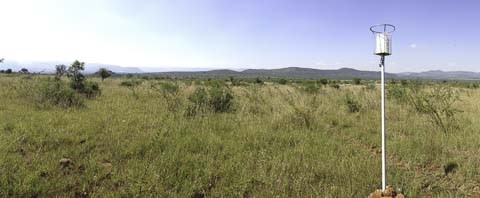
The implementation and management of a Fallout Dust Monitoring Programme (Dust Deposition Monitoring) in accordance with the requirements of the National Air Quality Act, whereby any operation that by the nature of its activities creates dust, is required to implement a Fallout Dust Monitoring Programme conforming to prescribed monitoring standards.
The Fallout Dust Monitoring Programme forms part of the baseline Environmental Impact Assessment process that is conducted for new developments as well as established activities and is to determine firstly the potential impact that new activities might have on the ambient environment, or secondly what impact an established activity has on the ambient environment.
The fallout dust monitoring services that InDuna Risk Management render to clients is not limited to the conventional pole and bucket system but also include more modern monitoring methods such as direct reading instrumentation with data logging capabilities that focus on PM10 and PM2.5 dust loads.
These stations can be positioned in any monitoring area, and they are capable of operation from an independent power source with no need for external Eskom power connections.
These monitoring stations are capable of transmitting data over various modes of communication from GSM to radio frequency transmitters that feeds data directly into the clients’ plant control room SCADA System and is intended for operations that need to maintain an Air Emission Licence from the Department of Environmental Affairs.

The National Environmental Management Act requires that a risk assessment must be conducted to determine the impact of any new or existing operation, through an Environmental Impact Assessment. The Department of Water Affairs also requires that an application has to be obtained for a water use licence.
This licence together with the requirements of the Environmental Management Plan requires that surface and groundwater quality monitoring must be conducted at a prescribed frequency.
The water use licence indicates what chemical and bacteriological analysis must be done at what intervals to maintain the validity of the water use licence and to monitor and prevent any environmental incidents from occurring.
Stack Emission Monitoring is conducted to determine the contaminant volumes that are released into the atmosphere and the effectiveness of the control measures implemented to reduce the release of such contaminants.
Monitoring includes the assessment of particulate matter and gaseous vapours and comparing the results to the guideline values prescribed in the National Environmental Management Act.

© Copyright 2026 - InDuna Risk Management